
 info@apexautoparts.co.uk
 +44 203 915 7535
 Safe & Fast Shipping
 Whish List
 Compare
 Sign In

The Land Rover Discovery has been one of the UK’s best-known family 4x4s for many years. It is roomy, strong, useful, and made for drivers who want more than a normal road car. It can tow, carry a family, handle bad weather, and still feel comfortable on long trips.
But when people talk about buying one, the same question comes up again and again. Which Land Rover Discovery engine is the most reliable?
That question matters because the Discovery is a heavy vehicle. Its engine has a big job. It has to move a large body, pull trailers, work off-road, and cope with long motorway runs. If the engine has been looked after, a Discovery can be a great car. If the wrong engine has been neglected, repair bills can be painful.
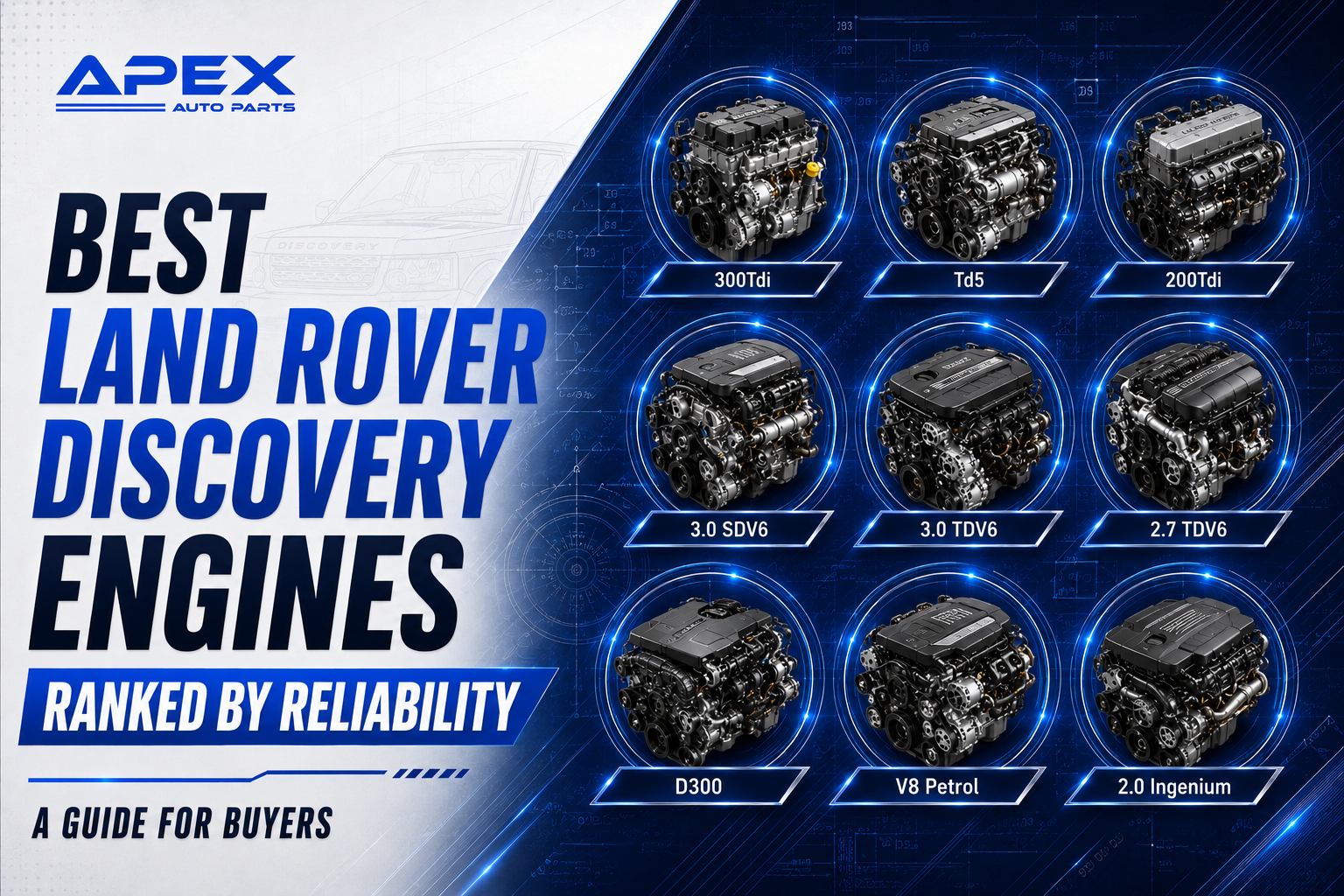
The Land Rover Discovery has used many engines over the years. Older models had simple diesel engines like the 200Tdi and 300Tdi. Later models used the Td5. Then came the 2.7 TDV6, 3.0 TDV6, 3.0 SDV6, and newer Ingenium engines. Modern Discovery models also have mild hybrid engines, including the D300 3.0 inline six diesel listed by Land Rover with 300 hp and 650 Nm of torque. Land Rover’s own data also notes that real fuel figures can vary with driving style, load, wheels, and conditions.
This guide ranks the main Discovery engines by real-world reliability. It also explains common Land Rover Discovery engine problems, what to check before buying, and why good parts matter.
At Apex Auto Parts, we are based in the UK and sell car engine parts. We help drivers and garages find the right parts for proper repairs. With a vehicle like the Discovery, correct fitment matters because different engines can use different parts, even when the cars look similar.
How Does This Ranking Work?
This ranking is based on real-world ownership, known engine issues, repair risk, age, service needs, and how well the engine copes when maintained properly. No engine is perfect. Even the best engine can fail if it has been run low on oil, overheated, badly serviced, or fitted with poor-quality parts.
A reliable engine is not only one that feels strong. It should also be simple enough to repair, not too sensitive to normal use, and able to handle high mileage when serviced on time.
For this ranking, the engines are judged by:
- Long-term strength
- Known weak points
- Cost of common repairs
- Parts access
- Service needs
- How badly neglect affects the engine
The result is not about speed only. It is about which Land Rover Discovery engine gives the best chance of strong use with fewer major problems.
1. 300Tdi Diesel
The 300Tdi is one of the most loved Discovery engines. It was used in the earlier Land Rover Discovery models and is known for being simple, tough, and easier to repair than newer engines. Many owners like it because it has fewer electronics and a more basic design.
This engine is not fast. It will not feel smooth like a modern diesel. But reliability is not always about speed. The 300Tdi is respected because it can keep going when serviced properly. It is also easier for many mechanics to understand.
The 300Tdi suits drivers who want a strong older Discovery for work, green lanes, towing at sensible speeds, or simple use. It does need care, though. Timing belt history is important. The cooling system's condition is important too. An old engine can still fail if it overheats or has been ignored.
Common issues can include oil leaks, worn belts, cooling problems, tired turbo parts, and old fuel system wear. But compared with many newer engines, the 300Tdi is still one of the easiest Discovery engines to live with.
Why it ranks high:
- Simple design
- Strong reputation
- Easier repairs
- Good parts support
- Less electronic trouble than newer engines
The 300Tdi is best for buyers who value strength over speed.
2. TD5 Diesel
The TD5 is another strong engine and one of the best choices for many Discovery 2 buyers. It has more electronics than the 300Tdi, but it still has a loyal following. Many owners see it as a good middle ground between old-style toughness and better driving performance.
A good TD5 can cover high mileage. It feels stronger than the older TDI engines and is better suited to daily driving. It still needs proper servicing, clean oil, and attention to known weak areas.
Common TD5 issues can include injector loom oil contamination, fuel pressure regulator leaks, coolant leaks, sensor faults, and oil leaks. These are well-known problems, and many can be fixed without replacing the whole engine. Recent technical guides also list common TD5 faults such as oil in the injector loom, fuel pressure regulator leaks, and cooling-related problems.
The TD5 is not perfect, but it is one of the better Discovery engines because its faults are often known, repairable, and easier to manage than some later diesel failures.
A well-kept TD5 is a good choice if you want an older Land Rover Discovery that still feels usable on modern roads.
3. 200Tdi Diesel
The 200Tdi is also a very strong, older engine. It came before the 300Tdi and has a good name among Land Rover fans. Like the 300Tdi, it is simple, tough, and easy to understand compared with newer engines.
The 200Tdi can last well when maintained, but most are now very old. This means the engine itself may be strong, but age can still cause trouble. Pipes, seals, cooling parts, mounts, belts, and fuel parts may all need attention.
The reason it sits below the 300Tdi is not that it is weak. It is mainly because good examples are now older and harder to find. Condition matters more than the engine name.
Common problems include oil leaks, coolant leaks, worn turbo parts, tired injectors, and age-related wear. If the engine has been overheated or badly maintained, it can still become costly.
For a classic Discovery buyer, the 200Tdi can be a great engine. For someone who wants easy daily use, the Td5 or a well-kept later diesel may feel better.
4. 3.0 SDV6 Diesel
The 3.0 SDV6 is a strong and smooth engine. It suits the size and weight of the Land Rover Discovery very well. It gives the car proper pulling power and makes towing easier. For many Discovery 4 owners, this engine feels like the right match for the vehicle.
It is more refined than the older engines and much stronger on the road. But it is also more complex. That means reliability depends heavily on maintenance.
The main concern is crankshaft bearing failure, especially on engines with poor oil service history, hard towing use, or long service gaps. Timing belt work is also important. Turbo, EGR, and DPF issues can also appear if the car is used mostly for short trips or has not been serviced properly. A technical guide on the 3.0 TDV6 notes crankshaft bearing wear as one of the most serious risks, along with timing belt, turbo, EGR cooler, and DPF issues.
This engine is not bad. In fact, a well-serviced 3.0 SDV6 can be excellent. But it is not an engine to buy with missing history.
Good points:
- Strong towing power
- Smooth performance
- Good match for Discovery 4
- Relaxed motorway driving
- Strong when maintained well
Risk points:
- Crankshaft risk on neglected engines
- Timing belt work must not be ignored
- Turbo and EGR repairs can be costly
- DPF issues if used for short trips
The 3.0 SDV6 is one of the best modern Discovery engines when cared for, but one of the riskiest when neglected.
5. 3.0 TDV6 Diesel
The 3.0 TDV6 is closely related in reputation to the SDV6. It gives strong torque, smooth driving, and better performance than the older 2.7 TDV6. It was used in Discovery 4 models and is popular with drivers who tow or cover long distances.
As with the SDV6, the engine can be reliable when serviced properly. The problem is that failures can be expensive when they happen. Crankshaft bearing wear, timing belt neglect, turbo problems, EGR cooler issues, and DPF faults are all points to watch.
The 3.0 TDV6 suits motorway drivers more than short-trip users. Long runs help the diesel system work properly. Short stop-start use can make DPF and EGR issues more likely.
If you are buying a Discovery with this engine, service history is not optional. You need proof of oil changes, timing belt work, cooling system care, and proper repairs.
A good 3.0 TDV6 can be a lovely engine. A neglected one can be a money pit.
6. 2.7 TDV6 Diesel
The 2.7 TDV6 was used in Discovery 3 models. It helped make the Discovery feel more modern compared with older diesel models. It is smoother than the TD5 and better suited to road use.
However, the 2.7 TDV6 has its own risks. Like the later 3.0 engines, it does not like poor oil care. It can suffer from EGR faults, turbo issues, coolant leaks, belt problems, and, in the worst case, crankshaft-related failure. It is not as strong in performance as the 3.0, but it is still a complex diesel in a heavy vehicle.
The 2.7 TDV6 can be a decent engine if it has been looked after. But because many Discovery 3 models are now older and cheaper to buy, some have been run on tight budgets. That is where problems start.
A cheap Discovery 3 can quickly become expensive if timing belts, oil services, suspension work, and cooling parts have been ignored.
The 2.7 TDV6 is best for buyers who find a clean car with a strong history. Avoid one with smoke, warning lights, poor starting, coolant loss, or unclear servicing.
7. 3.0 Inline Six D300 Diesel
The newer D300 engine is used in modern Discovery models. It is a 3.0 litre inline six diesel with mild hybrid support. Land Rover lists it with 300 hp and 650 Nm of torque in Discovery data, which makes it a strong engine for a large SUV.
This engine is smoother than older diesels and feels better matched to a premium modern car. It gives strong pulling power and should be more refined than older V6 diesel units.
The reason it is not ranked higher is simple. It is newer and more complex, and long-term high-mileage data is still growing. Modern emissions systems can also be costly if the vehicle is used badly. DPF, EGR, AdBlue, sensors, and software-related faults can all affect modern diesels.
For drivers who do long motorway runs, the D300 can be a strong option. For drivers who only do short urban trips, any modern diesel can become a poor match.
This engine may prove to be one of the better modern Discovery choices, but buyers should still keep service records clean and use correct parts.
8. Petrol V8 Engines
Petrol V8 Discovery models are smooth, powerful, and enjoyable. They can feel more refined than diesel models and avoid some diesel-related issues like DPF trouble. For drivers who do low yearly mileage, a petrol V8 can be attractive.
The problem is running costs. Fuel use is high, road tax can be high depending on model year, and parts can be expensive. Cooling system care is very important. Oil leaks, ignition faults, timing-related issues, and age-related wear can appear.
A petrol V8 can be reliable if maintained, but it is not usually the cheapest Discovery engine to own. It suits buyers who care more about smooth driving than fuel cost.
For UK buyers, petrol V8 models are less common than diesel models. That can make good examples harder to find. When buying, check the cooling system condition, oil leaks, smooth idle, service history, and any warning lights.
The petrol V8 is not a bad engine. It is just not the most practical choice for many UK Discovery owners.
9. 2.0 Ingenium Diesel
The 2.0 Ingenium diesel appears in newer Discovery models and related Land Rover vehicles. It was designed for better emissions and economy, but it has a mixed reputation.
The engine can work well for steady driving when serviced correctly. But in a large vehicle like the Discovery, some owners feel it works harder than larger engines. It can also be sensitive to short trips, oil dilution, DPF issues, timing chain concerns, and EGR problems.
A technical comparison of Discovery 4 and Discovery 5 engines notes that the 2.0 Ingenium diesel can struggle with DPF blockages and EGR carbon buildup when used for short stop-start trips. It also describes oil dilution from interrupted DPF cycles as a concern. Another technical guide on the 2.0 Ingenium engine discusses failure risks linked with this engine family.
This does not mean every 2.0 Ingenium diesel will fail. Many run well. But for a heavy Discovery, it is not the safest choice if reliability is the main goal.
It is best for drivers who do proper long journeys and keep servicing strict. It is not ideal for short school runs and town-only use.
10. Petrol Ingenium Engines
Petrol Ingenium engines are smoother and avoid some diesel-specific problems like DPF blockage. That can make them better for short trips. They can be a good choice for drivers who do lower mileage and want a quieter engine.
However, they are still modern turbo engines. That means they need correct oil, good cooling, clean service history, and proper diagnosis when faults appear. Fuel economy will usually be worse than diesel, especially in a heavy vehicle like the Discovery.
The petrol Ingenium engine is not ranked low because it is terrible. It is ranked here because long-term high-mileage reliability in a heavy Discovery can depend a lot on use, service care, and repair quality.
For a town-based driver who wants a newer Land Rover Discovery, petrol may make more sense than diesel. For towing and long-distance use, the larger diesel engines often feel better suited.
Common Land Rover Discovery Engine Problems
Searches for Land Rover Discovery engine problems are common because buyers want to avoid large bills. The main problems change by engine, but some themes are seen across many models.
Older engines often suffer from age-related problems. Newer engines often suffer from emissions system, sensor, turbo, and oil service-related issues.
Common Land Rover Discovery engine problems can include:
- Oil leaks
- Coolant leaks
- Overheating
- Turbo faults
- EGR valve trouble
- DPF blockage on diesel models
- Injector issues
- Timing belt or timing chain wear
- Crankshaft bearing failure on some V6 diesels
- Sensor and wiring faults
The key point is simple. Do not buy only by engine name. Buy by condition. A well-serviced 2.7 or 3.0 diesel can be better than a neglected engine with a better reputation.
Best Discovery Engine for Towing
For towing, the 3.0 SDV6 and 3.0 TDV6 are strong choices. They have the torque needed to move a heavy trailer or caravan. They also feel relaxed on motorways.
The D300 inline six is also a strong modern towing engine because of its high torque output. Land Rover lists the D300 with 650 Nm, which helps pull weight.
Older engines like the 300Tdi and Td5 can tow, but they feel slower and need more patience. They are strong in a simple way but not as effortless as the later diesels.
For towing, cooling system health is very important. A towing Discovery puts more load on the engine, gearbox, cooling system, and brakes. Poor maintenance can show up quickly when towing.
Best Discovery Engine for Daily Driving
For daily driving, the best engine depends on your use. If you drive long distances, the 3.0 diesels or D300 can make sense. If you do short trips, a petrol engine may be safer than a modern diesel.
The Td5 can still work as a daily engine if the vehicle is in good condition. It has enough power for normal use and is easier to fix than many newer engines. But the car will feel older.
The 2.0 Ingenium diesel may be fine for long, steady trips, but it is not ideal for many short journeys. Short trips can stop the DPF from cleaning itself properly and may increase oil dilution risk.
A daily Discovery should be chosen by journey type, not only by fuel economy.
Best Discovery Engine for Low Repair Risk
If low repair risk is the main goal, older simple engines rank well. The 300Tdi, 200Tdi, and Td5 are easier to understand and often cheaper to repair than newer engines. But they are old, so body condition, rust, and past care still matter.
For newer comfort, a good 3.0 SDV6 or TDV6 with a strong service history can be a good choice, but buyers must accept higher repair risk if history is missing.
A modern D300 may be a good long-term engine, but it is still complex. Correct servicing and good parts are essential.
How to Check a Discovery Engine Before Buying?
Before buying any Land Rover Discovery, check the engine carefully. A clean body and nice interior do not prove the engine is healthy.
Ask for service history. Look for oil changes, timing belt work, coolant repairs, turbo work, and proof of proper maintenance. Check if warning lights come on and go off correctly. Listen to the engine cold and warm.
Watch for smoke, rough idle, coolant loss, oil leaks, slow starting, rattles, and loss of power. Check the MOT history for repeated warnings or neglect. If possible, get a proper scan and inspection before buying.
A few checks before buying can save thousands later.
Why Parts Quality Matters?
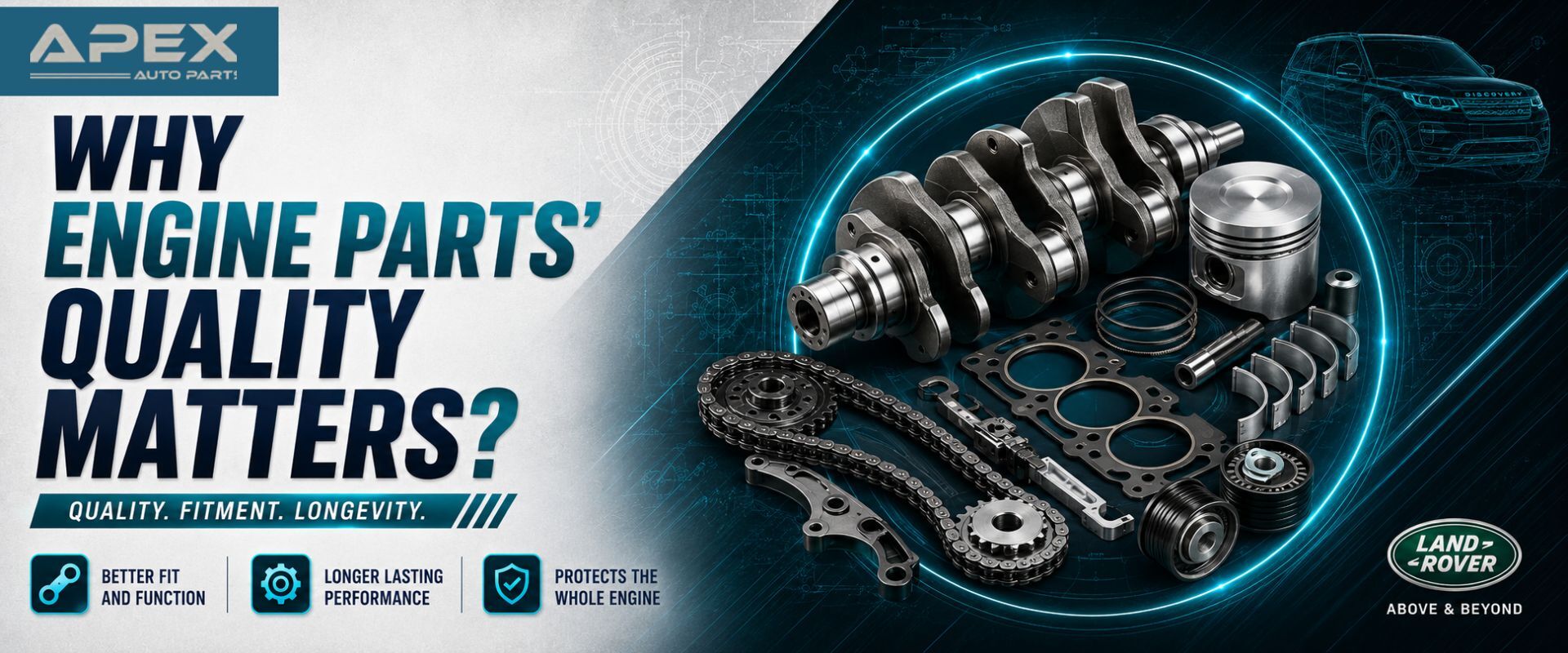
A Land Rover Discovery engine works hard because the vehicle is heavy. Cheap or wrong parts can cause repeat faults. A poor-quality hose can leak. A bad sensor can give false readings. A weak gasket can fail early. A wrong belt or pulley can damage other parts.
This is why fitment matters. Discovery engines changed across generations, years, and trims. One part may fit one Discovery but not another.
When buying Land Rover Discovery parts, check:
- Registration number
- VIN
- Engine code
- Model year
- Fuel type
Old part number if possible
Apex Auto Parts is based in the UK and supplies car engine parts. For Discovery owners and garages, the right part can make the repair smoother and help protect long-term reliability.
Final Thoughts
The best Land Rover Discovery engine depends on what you need. If you want simple strength, the 300Tdi, 200Tdi, and Td5 have strong reputations. If you want towing power and comfort, the 3.0 TDV6 and SDV6 are strong choices, but only with good service history. If you want a newer Discovery, the D300 looks strong on paper, but it still needs strict care.
The main mistake is buying by badge alone. The Land Rover Discovery can be a brilliant vehicle, but it is not cheap to fix when ignored. Service history, oil care, cooling system health, correct parts, and proper diagnosis all matter.
Many Land Rover Discovery engine problems can be managed if they are found early. Small leaks, warning lights, belt issues, turbo faults, and cooling problems should not be left until they become major failures.
If you own or repair a Discovery in the UK, Apex Auto Parts can help with car engine parts. The right part, fitted at the right time, can help keep your Discovery working well for longer.
FAQs
1. What is the most reliable Land Rover Discovery engine?
The 300Tdi is often seen as one of the most reliable Land Rover Discovery engine choices because it is simple, strong, and easier to repair. The TD5 is also well liked. For newer models, the 3.0 SDV6 can be good, but only with a strong service history and careful oil maintenance.
2. Is the Land Rover Discovery reliable?
The Land Rover Discovery can be reliable if it has been serviced properly and repaired with good quality parts. Many problems come from neglect, missed oil changes, coolant leaks, poor diagnosis, or cheap parts. A well-cared-for Discovery is usually far better than a cheap one with missing history.
3. What are common Land Rover Discovery engine problems?
Common Land Rover Discovery engine problems include oil leaks, coolant leaks, turbo faults, EGR problems, DPF blockage, injector issues, timing belt wear, timing chain wear, and crankshaft bearing failure on some V6 diesels. The exact risks depend on the engine, age, mileage, and service history.
4. Is the TD5 a good Land Rover Discovery engine?
Yes, the TD5 is a good Land Rover Discovery engine when maintained well. It is stronger and more modern than older TDI engines but still easier to repair than many newer engines. Common faults include injector loom oil issues, fuel pressure regulator leaks, sensor faults, and coolant problems.
5. Is the 3.0 SDV6 Discovery engine reliable?
The 3.0 SDV6 can be reliable if serviced properly and not run on long oil intervals. It gives strong power and suits towing well. The main risks are crankshaft bearing wear, timing belt neglect, turbo faults, EGR issues, and DPF problems. A good history is very important before buying.
6. Which Land Rover Discovery engine is best for towing?
The 3.0 TDV6, 3.0 SDV6, and newer D300 diesel engines are strong choices for towing. They have the torque needed for a heavy trailer or caravan. Older engines like the 300Tdi and Td5 can tow too, but they feel slower and need more patience on hills.
7. Should I avoid the 2.0 Ingenium Discovery engine?
You do not always need to avoid it, but you should buy carefully. The 2.0 Ingenium diesel can be sensitive to short trips, oil dilution, DPF issues, timing chain concerns, and EGR problems. It suits long steady runs better than short town use in a heavy Discovery.
8. What causes most Land Rover Discovery engine problems?
Most Land Rover Discovery engine problems come from poor servicing, wrong oil, overheating, ignored leaks, short trip diesel use, old belts, weak cooling parts, and low-quality replacement parts. Heavy towing can also stress the engine if maintenance is poor. Early checks are cheaper than major repairs.
9. Is a petrol Land Rover Discovery better than diesel?
A petrol Land Rover Discovery can be better for short trips because it avoids diesel DPF issues. It is usually smoother too. Diesel is often better for towing and long motorway driving. The best choice depends on mileage, fuel cost, service history, and how the car will be used.
10. Where can I buy Land Rover Discovery engine parts in the UK?
You can buy Land Rover Discovery engine parts online from a UK-based supplier like Apex Auto Parts. Before ordering, check the registration number, VIN, engine code, fuel type, and part number if possible. Correct fitment is important because Discovery engines vary by year and model.
Reference:
jaguar land rover classic
media land rover
land rover